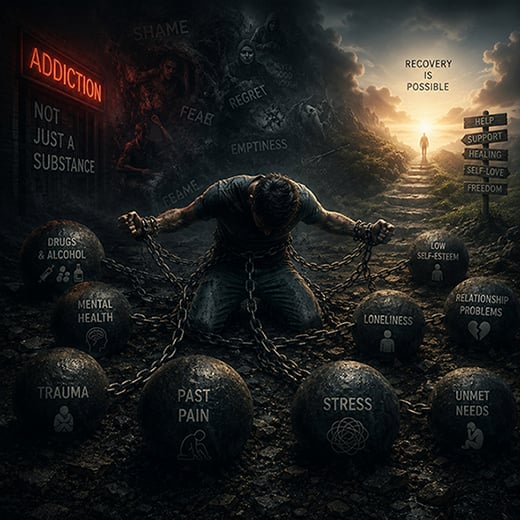
Exploring Addiction : Beyond Substance Use 

Mobirise Website Builder

Addiction Is More Than Substance Use

Addiction is one of the most misunderstood health conditions in the world. Many people believe it is simply a lack of willpower or a moral failing. In reality, addiction is a chronic, treatable brain disorder influenced by biological, psychological, social, and spiritual factors.

Recovery begins when we replace judgment with understanding and recognize that every individual has a unique story shaped by emotional pain, trauma, and life experiences . 

Mobirise Website Builder

Is There Such a Thing as an Addictive Personality?

The  term "addictive personality" is not a formal medical or psychological diagnosis. However, research suggests that certain personality traits  may increase their vulnerability to addiction . Particularly when combined with childhood trauma, Adverse Childhood Experience (ACEs) dysfunctional family environments, chronic stress and insecure attachments patterns factors. Understanding these underlying patterns helps us address the root causes of addiction , not just the symptoms .


Addictive Personality traits may include:
  1. Difficulty regulating emotions 
  2. Impulsivity 
  3. Sensation seeking 
  4. Low self-esteem 
  5. Fear of rejection or abandonment 
  6. Chronic feelings of emptiness 
  7. Perfectionism 
  8.  Difficulty tolerating distress 
  9. People-pleasing tendencies 
  10. Difficulty forming healthy relationships 

    These characteristics do not mean someone will develop an addiction. They simply increase vulnerability, especially when healthy coping skills are absent.

How Does an Addictive Pattern Develop?

Addiction rarely develops overnight.
For many people, substances become a way of coping rather than simply seeking pleasure.

People often use alcohol or drugs to:

  1. Escape emotional pain - Addiction often begins as an attempt to escape emotional hurt and inner distress.
  2. Reduce anxiety - People may rely on substances or behaviors to temporarily relieve stress and anxiety.
  3. Cope with loneliness - Feelings of isolation can lead individuals to seek comfort through addictive patterns.
  4. Numb traumatic memories - Addiction is often used to suppress painful memories and unresolved trauma.
  5. Feel accepted by peers - The desire to fit in or belong can increase the risk of developing addictive behaviors.
  6. Increase confidence - Some individuals use substances or behaviors to overcome insecurity and boost self-confidence.
  7. Avoid difficult emotions - Addiction can become a way to avoid confronting fear, guilt, anger, or sadness.

    Initially, substances may seem to provide relief. Over time, however, the brain begins to rely on them as the primary way to regulate emotions, leading to dependence and addiction.
Mobirise Website Builder

The Hidden Role of Childhood Trauma

Many individuals struggling with addiction have experienced adverse childhood experiences (ACEs). While not everyone with trauma develops addiction, unresolved trauma can significantly increase the risk.

Examples include:

• Physical abuse
• Emotional abuse
• Sexual abuse
• Emotional neglect
• Physical neglect
• Domestic violence
• Parental addition or substance use
• Loss of a parent or primary caregiver
• Chronic criticism
• Bullying
• Growing up in an unpredictable or unsafe environment

Children exposed to these experiences often learn to survive rather than feel safe. This can leave the nervous system may remain in a constant state of stress, making emotional regulation more difficult later in life. 

Mobirise Website Builder

Healing the Emotional Wounds

Recovery involves much more than stopping substance use.
True healing means addressing the underlying emotional pain that fuels addiction.

Healing often includes: 

• Learning emotional regulation skills
Processing unresolved trauma
• Developing healthy coping strategies
• Building self-worth
• Repairing relationships
• Learning healthy boundaries
• Practicing self-compassion
• Reconnecting with personal values and purpose

As individuals heal emotionally, their need to rely on substances gradually decreases.

A Message of Hope

No matter how long someone has struggled with addiction, healing is possible. The brain can recover, emotional wounds can heal, and people can rebuild meaningful and fulfilling lives.

At Right Track , we believe that lasting recovery comes from treating the whole person—not just the addiction. By addressing the biological, psychological, social, spiritual and emotional roots of substance use, we help individuals move beyond survival toward genuine healing, resilience, and lasting hope. 

"Recovery begins when we stop asking, "What's wrong with me?" and start asking, 'What happened to me, and how I heal?"

FAQs

1. What is addiction?

Addiction is a chronic but treatable condition that affects the brain and behaviour, making it difficult to stop using substances despite harmful consequences.

2. What substances do you treat?

We provide treatment for alcohol, cannabis, opioids, heroin, crystal meth (ice), prescription medication misuse, and other substance use disorders.

3. How do I know if my loved one needs treatment?

Signs may include loss of control over substance use, withdrawal symptoms, neglect of responsibilities, changes in behaviour, relationship problems, and repeated unsuccessful attempts to quit.

4. What is the duration of your treatment program?

Treatment length depends on each individual's needs. We offer  90-day, and extended residential treatment programs.

5. What is an intervention?

An intervention is a structured process in which trained professionals help families encourage a loved one to recognize the need for treatment and accept help.

6. Do you provide treatment for people with both addiction and mental health conditions?

Yes. We assess and treat co-occurring mental health conditions such as psychosis, anxiety, depression, and trauma alongside addiction treatment whenever appropriate.

7. What happens after treatment is completed?

Recovery continues after rehabilitation. We provide aftercare planning, follow-up counseling, recovery coaching, and ongoing support to help clients maintain sobriety.

Follow us

© Copyright 2026 RightTrackCare.com - All Rights Reserved. Powered By Designguy Aj

No Code Website Builder